This article may contain affiliate links. If you buy through them, Living Beautifully Daily may earn a small commission at no extra cost to you. Learn more.
For years I ironed everything the same way: hot iron, flat surface, press until the wrinkles disappeared. Then I ruined a wool jacket lapel by flattening a roll that was supposed to curve, and a tailor friend explained that I had been pressing when I should have been ironing, and ironing when I should have been pressing. They are not the same motion, and using the wrong one on the wrong fabric is how good clothes lose their shape early.
Ironing is sliding, pressing is stamping
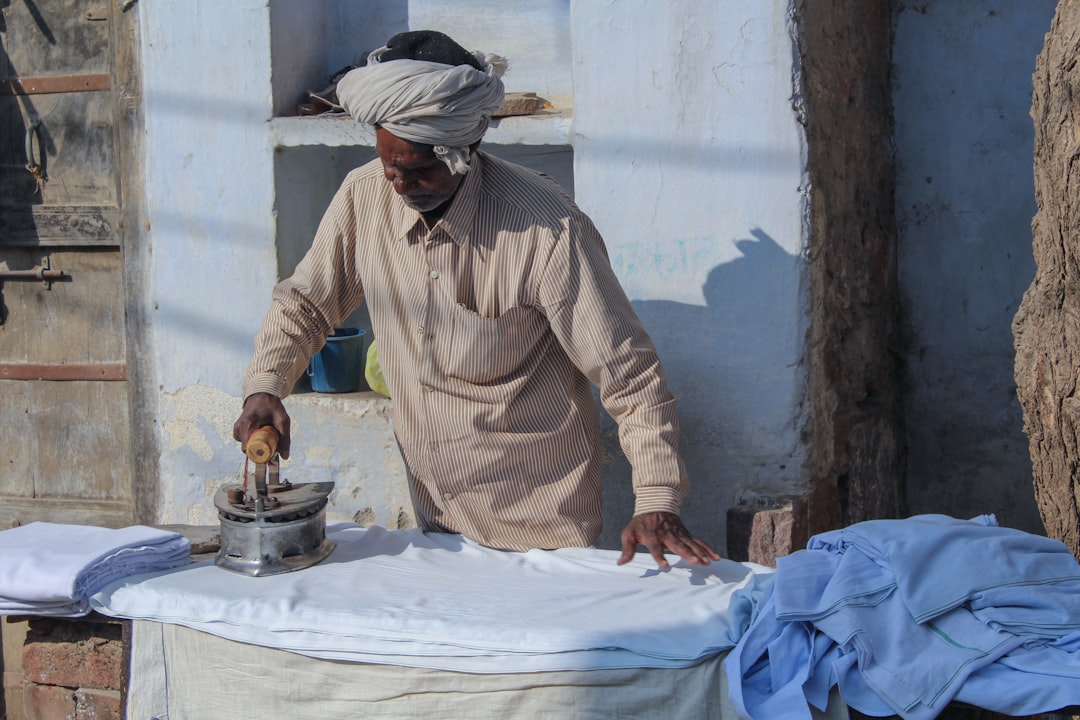
Ironing means moving the iron back and forth across the fabric while it sits flat on the board. The sliding motion smooths the weave and works well on flat, stable fabrics like cotton shirting and linen, where you want an even, crisp surface with no texture left behind.
Pressing means lifting the iron, setting it down on one spot, holding it there for a few seconds, then lifting it straight up and moving to the next spot without dragging. There is no sliding at all. This is the method for anything with structure you want to preserve: a jacket lapel, a pleat, a seam allowance, tailored trousers. Sliding an iron across a lapel roll flattens the shape the tailor built into it with steam and stitching, and that shape does not come back on its own.
Why the distinction exists
A flat cotton shirt has no built-in three-dimensional shape to protect. Every part of it is meant to lie flat, so sliding the iron across it in long strokes is efficient and does no harm. A tailored jacket is the opposite. Its shoulder, lapel, and chest are shaped through a process called blocking, where the fabric is steamed and eased over a curved press form while it is being constructed. That shape lives in the fibers. Sliding a hot iron across it works against the very thing the tailor spent time building.
This is also why pressing always uses a lighter touch and often a damp cloth between the iron and the garment. The cloth, called a press cloth, protects delicate or napped fabric from direct heat and prevents the shine that comes from an iron sitting too long or too hot against fibers like wool.
Matching heat to fiber, not to how wrinkled something looks
Most irons have fabric settings for a reason, and the difference between them is not marketing. Cotton and linen tolerate high heat and direct contact well. Wool needs a lower setting and almost always benefits from steam and a press cloth rather than dry direct heat, because dry heat on bare wool is what causes shine and, over repeated sessions, a slightly crisp, dead hand to the fabric. Silk needs the lowest heat of the common fabrics and no water spots, since water can leave a permanent mark on some silk weaves.
Setting the iron by how wrinkled a garment looks, rather than by what it is made of, is the single most common mistake I see. A badly wrinkled cotton shirt can take a hot iron and heavy pressure without complaint. A lightly wrinkled wool blazer cannot take the same treatment even though it looks like it needs less work.
Seams get pressed, not ironed, and always from the inside first
Seam allowances, the extra fabric just inside a seam, should be pressed flat from the inside of the garment before you ever touch the outside. This sets the seam so it lies flat under the outer fabric instead of creating a visible ridge. Skipping this step and going straight to ironing the outside of a seam is how you get that slightly lumpy line along a seam that never quite lies right no matter how much you iron the front.
A gentle press from the inside, seam by seam, does more for how a garment sits than ten minutes of ironing the outside ever will.
Steam is doing more work than heat
Steam relaxes the fibers so they can be reshaped, while heat alone just presses a wrinkle flatter without fully releasing it. That is why a hanging garment steamer can soften wrinkles that a dry iron struggles with, and why professional pressing always involves steam rather than dry heat alone. If your iron has a steam function and you are only using it dry, you are working harder than you need to for a worse result.
For structured pieces, a small amount of steam held close without full contact, followed by a light press with a cloth, does far less damage than direct ironing and gets the wrinkle out just as well.
What this means in practice
Sort what you are pressing before you plug in the iron. Flat wovens like shirts, sheets, and linen napkins get the slide. Anything with built-in shape, structure, a pleat, or a nap gets the stamp-and-lift press with a cloth and appropriate heat. Getting this backward is not a small stylistic choice. It is the difference between a garment that keeps its shape for years and one that goes flat and shiny well before it should.