This article may contain affiliate links. If you buy through them, Living Beautifully Daily may earn a small commission at no extra cost to you. Learn more.
For a long time I assumed streaky windows meant I had bought the wrong cleaner, so I kept switching bottles. Vinegar, then a blue spray, then a different blue spray. The streaks kept coming back because the problem was never the liquid. It was the cloth, the light, and the order I worked in.
Work in shade, not direct sun
This is the single biggest fix and almost nobody does it. Cleaning solution dries fast in direct sunlight, and it dries unevenly, leaving behind the mineral and soap residue that reads as a streak once the glass is dry. Wait for a cloudy afternoon, or clean the sun-facing side of the house in the morning and the shaded side in the afternoon, so you are always working on glass out of direct light. If you have ever cleaned a window that looked perfect while wet and then dried into a streaky mess, this is almost always why.
Stop using paper towels
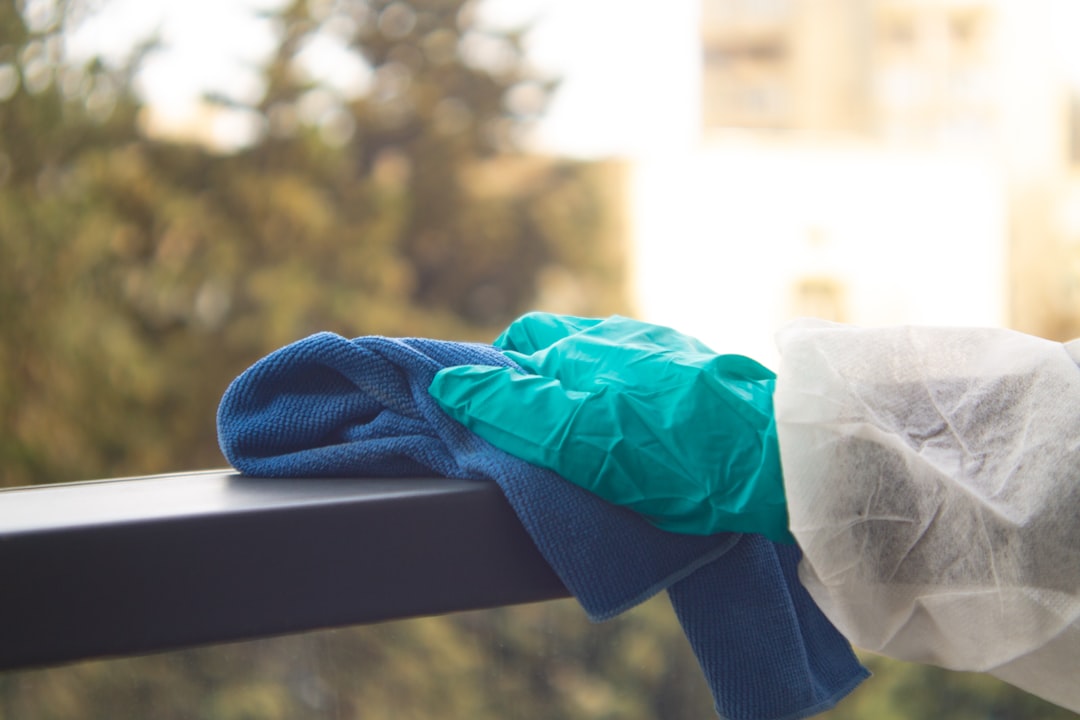
Paper towels leave lint on glass, and that lint is what catches light at an angle and looks like a smear even on an otherwise clean pane. A microfiber cloth or, for genuinely streak-free results, a rubber-bladed squeegee paired with a cotton lint-free cloth for the edges, is the actual professional tool. Window cleaners who do this for a living are not using paper towels, and there is a reason for that beyond habit.
The method, in order
- Dust the frame and sill first, dry, before any liquid touches the glass. Wet dust turns into mud that runs down onto glass you have not cleaned yet.
- Apply cleaning solution to the glass, enough to cover it evenly, not so much that it runs down onto the sill in streams.
- If using a squeegee, start at the top corner and pull it down and across in a single continuous S-shaped stroke, wiping the blade dry on a cloth after each pass so you are never dragging dirty water across clean glass.
- If using a cloth, work top to bottom in straight overlapping passes, not circles. Circular motion is what creates the faint arcing streaks people blame on the product.
- Finish the edges and corners, where liquid tends to pool, with a dry section of the cloth.
The direction matters more than people expect. If you wipe the inside of the glass horizontally and the outside vertically, any streak that remains tells you immediately which side of the glass it is on, so you are not chasing a smear back and forth between two panes.
What is actually in the streak
A streak is leftover mineral content from hard water, residual soap, or wax buildup from furniture polish drifting onto nearby glass, left behind as the liquid evaporates unevenly. Distilled water in your solution, instead of tap water, removes the mineral variable entirely if you live somewhere with hard water. A simple mix of a few tablespoons of white vinegar in a quart of distilled water cuts through most residue without leaving its own film, provided you do not overuse it, since straight vinegar in high concentration can leave a haze of its own on some coated glass.
The cloth is doing most of the work. The spray is doing very little of it.
The cloth itself needs care too
A microfiber cloth that has been washed with fabric softener loses its static charge and its ability to grab dust, and will smear rather than lift residue. Wash cleaning cloths separately from the rest of your laundry, without softener, and let them air dry rather than putting them through a hot dryer cycle with dryer sheets, which coats the fiber the same way it coats towels. I keep two cloths dedicated only to glass, never used for countertops or anything else, because any trace of oil transferred from another surface will show up as a smear on glass immediately.
Screens and storm windows change the math
If your window has a screen, clean the screen separately and let it dry before reinstalling it, since a wet screen will drip mineral-laden water down the glass you just finished. And if you have a storm window or a second pane, both surfaces need attention. Streaks that will not go away no matter how carefully you clean are sometimes on the inner face of a double pane you cannot reach, which is a sign of a broken seal rather than a cleaning failure, not something any technique will fix.
The five-minute version
Clean in shade, use a lint-free cloth or squeegee instead of paper towels, work top to bottom in straight lines instead of circles, and dry the edges last. Do those four things and the bottle you use matters far less than most cleaning aisles would have you believe.