This article may contain affiliate links. If you buy through them, Living Beautifully Daily may earn a small commission at no extra cost to you. Learn more.
Bathrooms have a reputation for being the hardest room in a house to clean well, and I think that reputation is mostly earned by bad sequencing rather than a lack of effort. It is a small room with several surfaces that are not equally dirty, and cleaning them in the wrong order just spreads what is on the dirtiest surface onto the ones that started out cleaner.
Let the cleaner sit before you touch anything
The single biggest improvement I made to how I clean a bathroom was accepting that spraying and immediately wiping does almost nothing. Most cleaners, whether a store-bought disinfectant or a simple vinegar solution, need contact time to actually break down grime and kill what they are meant to kill. Read the back of a bottle sometime. Most disinfecting claims require the surface to stay visibly wet for a specific number of minutes, often five or ten, not the few seconds most people give it.
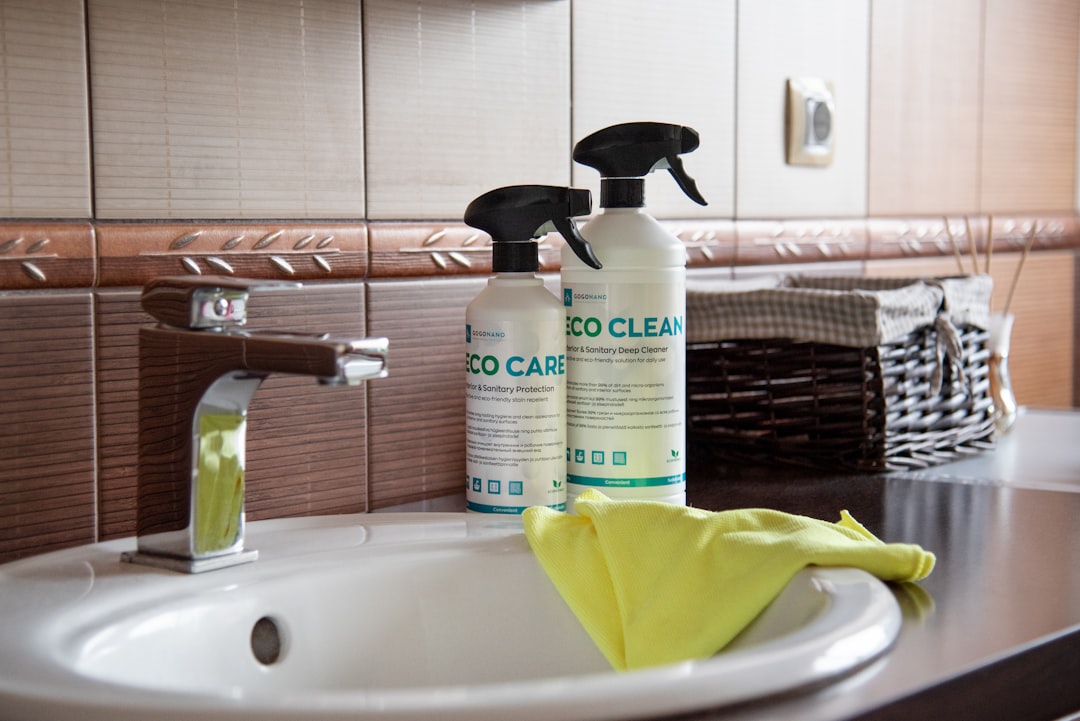
So the first move in a bathroom clean is not scrubbing. It is spraying everything that needs cleaning, in this order, and then walking away to let it work: toilet bowl and exterior, shower and tub, sink, then leaving all of it to sit while you do something else, even if that something else is just wiping down the mirror.
Highest and cleanest surfaces first
While the sprayed surfaces sit, start with the surfaces that are actually the least dirty, which surprises people because it is the opposite of the kitchen instinct. Mirrors, light fixtures, and the outside of any cabinets get done here, before you touch the toilet or the shower, because you have not yet handled anything that would transfer grime onto your cloth or your hands.
Toilet last among fixtures, always
The toilet is the dirtiest fixture in the room and should be the last thing you clean, always, no exceptions, including using a dedicated cloth or disposable wipe for it rather than the same cloth used on the sink or counter. Inside the bowl with a brush, then the seat, then the exterior including the base, which people skip constantly and which is often the actual source of bathroom odor, not the bowl itself.
Cross-contamination in a bathroom is not a dramatic event. It is a cloth used on the toilet seat and then, without thinking, run across the counter a minute later. The sequence exists specifically to prevent that small, easy mistake.
Shower and tub, working from the top down
By now the shower has had several minutes of cleaner sitting on it. Start scrubbing at the top, the showerhead and upper tile, and work down to the tub floor last. Soap scum and mildew that get knocked loose from the walls fall down, and if you have already cleaned the tub floor, you are just recoating it. Grout lines need their own attention with a stiff brush, since a sponge alone glides over grout without actually lifting what has settled into the texture.
For hard water spots on glass shower doors, plain vinegar again does the job well since glass is not vulnerable to acid the way stone is, left on for a few minutes and then wiped with a squeegee.
Sink after the shower, floor after everything
The sink gets its real scrub after the shower, not before, since anything splashed during the shower scrub can land near the sink. Faucet, basin, then the counter around it. The floor is the true last step, mopped only after every other surface is done and nothing more will drip onto it.
Why the pause matters more than the scrubbing
People tend to judge how clean a bathroom is by how hard they scrubbed, but contact time does more of the actual work than pressure does. A bathroom cleaned with light scrubbing after a full five minutes of cleaner sitting untouched will come out cleaner than one scrubbed hard immediately after spraying. This is the part of bathroom cleaning that gets skipped most often, mostly because it feels like doing nothing, standing in a small room waiting for a spray to sit. It is not nothing. It is the step that makes the rest of the sequence actually work.
A realistic rhythm
A full sequence like this does not need to happen daily. Wiping the sink and giving the toilet a quick pass can be a daily or every-other-day habit, while the full sequence, spray and wait, top to bottom, fixture by fixture, works well as a once-a-week routine. Trying to do the complete version every single day is how people burn out on having any routine at all, and a bathroom that gets a real clean once a week, done properly in order, ends up looking better than one wiped hastily every day out of guilt.