This article may contain affiliate links. If you buy through them, Living Beautifully Daily may earn a small commission at no extra cost to you. Learn more.
A friend once asked me to help her pick out a dinnerware set, and when we got to the store she pointed at two bowls that looked nearly identical and asked why one cost three times the other. The honest answer required going back to what the clay was before it ever became a bowl. Ceramics get judged almost entirely on glaze color and shape, when the material underneath is doing most of the real work of determining how the piece will hold up.
It starts with the clay body
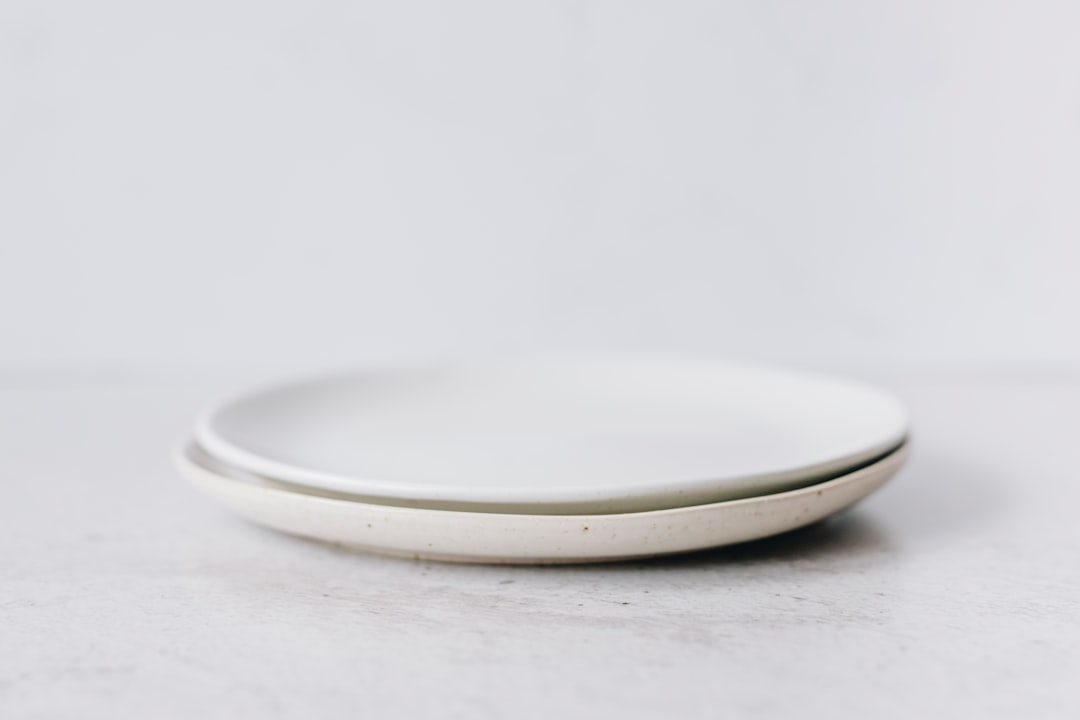
Stoneware and porcelain are both ceramics, but they start from different clay and are fired at different temperatures, and that single variable changes almost everything about the finished object. Stoneware is fired at a lower temperature, generally in a range that leaves the clay body slightly porous unless it is fully glazed. It tends to be a bit heavier, often shows a warmer, sometimes speckled tone at the base or foot ring where the glaze does not reach, and it is generally more forgiving of the occasional knock.
Porcelain is fired at a much higher temperature, which vitrifies the clay, meaning the particles fuse into something closer to glass. That is why porcelain can be made thin and still feel dense and slightly translucent when you hold it up to light, and why the unglazed foot of a porcelain piece is bright white rather than warm and speckled. It is also, somewhat counterintuitively, more brittle in a specific way. Porcelain resists everyday wear extremely well, but when it does fail, it tends to chip or crack sharply rather than absorbing the impact the way a thicker stoneware piece sometimes will.
Why the price gap is not just branding
Porcelain clay is more difficult to work with and less forgiving during firing, with a narrower window between properly vitrified and warped or cracked in the kiln. That difficulty is a real cost that gets passed along, separate from any brand markup. When you see a porcelain set priced close to a stoneware set of similar size, that is worth a second look, because it usually means shortcuts were taken somewhere, either a lower firing temperature that leaves the piece less durable than true porcelain should be, or a very thin glaze application.
What each material is actually good for
Stoneware is the better choice for everyday use in a household with kids, frequent guests, or anyone who is simply hard on dishes. It holds heat well, which makes it good for baking dishes and casserole style serving pieces, and its weight gives it a stability on the table that lighter dinnerware lacks. The tradeoff is that it is bulkier to store and, because it is often less refined in appearance, it reads as more casual.
Porcelain earns its reputation for a reason when the occasion calls for it. It photographs well, it stacks more compactly because the walls can be thinner, and a good glaze on porcelain has a depth and evenness that is hard to match on stoneware. Where people go wrong is buying an entire everyday set in porcelain and then being upset when a piece chips after normal use. Fine porcelain deserves the same respect you would give good glassware, meaning careful stacking and a little more attention when loading a dishwasher, not the same treatment as a set meant for daily abuse.
How to actually tell them apart in the store
- Flip the piece over and look at the unglazed foot ring, warm and slightly rough usually means stoneware, bright white and smooth usually means porcelain
- Hold it up to a light source if you can, a thin porcelain piece will often let a faint glow through, stoneware will not
- Tap it gently with a fingernail, porcelain tends to ring with a clearer, higher pitched sound, stoneware gives a duller thud
- Compare weight to size, a large plate that feels surprisingly light is more likely porcelain, one with real heft is more likely stoneware
- Check the glaze coverage on the bottom edge, a well made piece of either type should have a clean, even glaze line without drips or bare patches except at the foot
Buying for how you actually live
The mistake is treating this as a hierarchy where porcelain is simply the better, more expensive option and stoneware is the budget compromise. They are suited to different lives. A household that entertains occasionally and hand washes its good dishes will get real value out of porcelain. A household that eats every meal on the same set and runs it through the dishwasher daily will get more actual years of service out of stoneware, and will likely be happier with it besides.
The right material is the one that matches how the piece will actually be used, not the one that photographs best on a shelf.
Buy the clay body suited to your table, not the one that sounds more impressive at the register. A stoneware bowl that survives a decade of daily breakfasts has done its job every bit as well as a porcelain platter that comes out four times a year and always looks perfect.