This article may contain affiliate links. If you buy through them, Living Beautifully Daily may earn a small commission at no extra cost to you. Learn more.
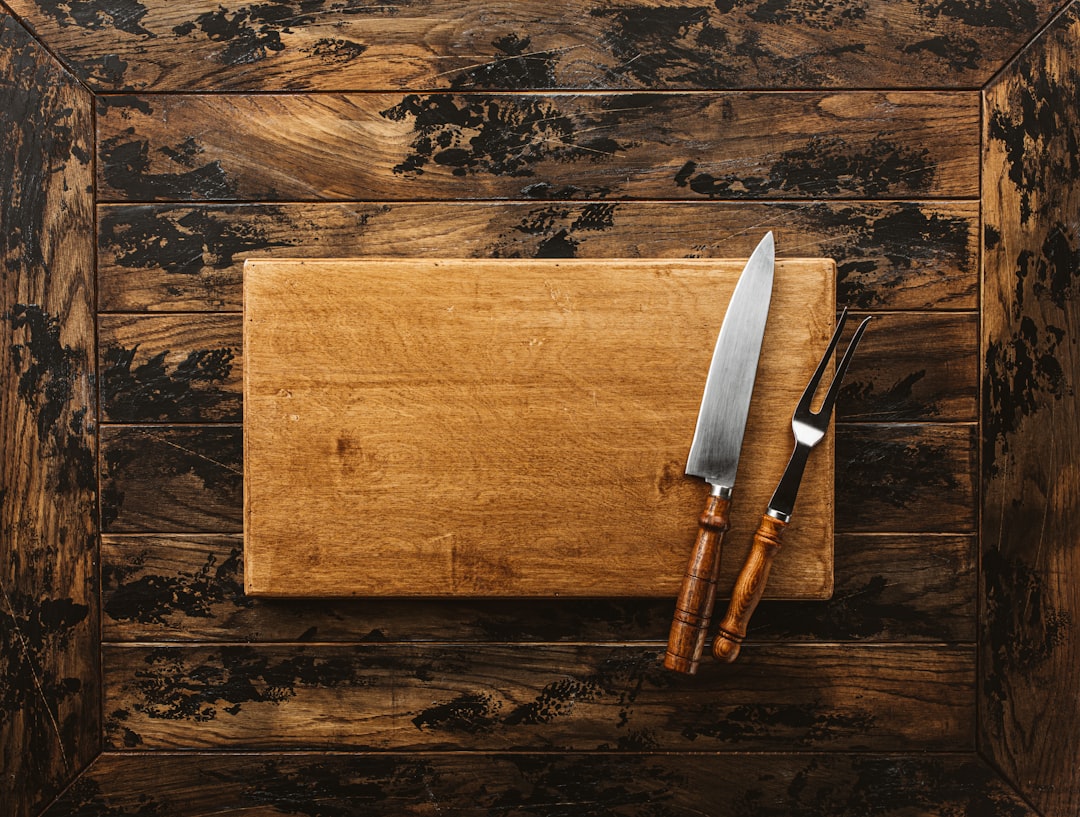
I have three cutting boards in regular rotation. One of them is older than my marriage. It has a dip worn into the center from a decade of onions, and it still sits flat on the counter without rocking. The other two are younger, cheaper, and already showing hairline cracks along the grain. The difference was never how I treated them. It was what they were made of before I ever brought them home.
People shopping for a cutting board tend to ask about size and price first, and wood species maybe third if at all. That is backward. The species and the way the board was constructed determine almost everything about how it will hold up, long before you factor in how carefully you wash it.
End grain versus edge grain, and why it matters
Cut a tree trunk crosswise and you get end grain, the pattern you see in a butcher block where the wood fibers point straight up like a bundle of straws. Cut along the length of the trunk and you get edge grain, the long parallel lines you see on most standard boards.
End grain boards cost more because they are harder to make. Small blocks of wood are glued together with the fiber ends facing up, so when a knife comes down, it slides between the fibers rather than slicing across them. The wood closes back up slightly after each cut. That is why a good end grain board is gentler on knife edges and resists deep scarring better than an edge grain board of the same species.
Edge grain boards are not inferior, they are just a different tool. They are more affordable, lighter, and perfectly fine for everyday chopping. What you should not buy is face grain, sometimes sold as a flat board where the wide face of the plank is up. It looks similar to edge grain in photos but is more prone to warping because of how the grain runs relative to the surface. Ask, or look closely at the end of the board, before buying.
Species matters more than most labels tell you
Maple is the standard for a reason. It is closed grain, meaning the pores are tight enough that liquid does not seep in easily, and it is hard enough to resist deep gouging without being so hard that it dulls knives fast. Walnut is a step softer and darker, a fine choice if you want the color, though it will show wear a little sooner. Cherry is softer still and better suited to serving than heavy daily chopping.
Where I tell people to slow down is bamboo. It is marketed as a wood cutting board, and it is not wood at all. Bamboo is a grass, and manufacturers slice it into strips and press it back together with adhesive under heat. That bonding process makes bamboo boards very hard, harder than maple, which sounds like a selling point until you realize hardness is not the only thing that matters. A surface that hard is rougher on knife edges, and the glue lines between strips are a weak point where moisture can work its way in over time and cause splitting. Bamboo boards are inexpensive and renewable, both real advantages, but they are not a straight substitute for a hardwood board if what you want is decades of service.
What thickness tells you
A board under three quarters of an inch thick is going to warp eventually, especially edge grain ones, because there simply is not enough mass to resist the wood’s natural tendency to move with humidity. Look for at least an inch, and for a board that will live on the counter and take daily abuse, an inch and a half is not excessive. Thick boards are heavier, which people sometimes complain about when they lift it to wash, but that weight is exactly why it stays flat and why it does not slide around while you are cutting.
What to check before you buy
- Look at the end of the board to confirm the grain orientation, not just the top surface photo
- Ask what wood species it is, and be skeptical of boards labeled simply as hardwood with no species named
- Check the thickness listed, not just the length and width
- Press a fingernail gently into an inconspicuous edge if you can see the board in person, extremely soft give is a sign of a lower density wood that will scar quickly
- Look for a single piece or well glued sections with tight, even seams rather than visible gaps
Is it worth spending more
A well made maple or walnut end grain board, bought once, will outlast several cheaper boards bought in succession. I paid more for mine than I wanted to at the time, and I have not thought about replacing it since. That is really the test I use for any material purchase in the kitchen: not whether it is the cheapest option today, but whether I will still be glad I bought it in ten years. A cutting board that meets your knife edge with real resistance, holds its shape, and develops a good patina instead of cracking is one of the few kitchen purchases where the higher price is not vanity, it is physics.
The board is not decoration. It is the surface your knife touches every single day, so its material is worth more scrutiny than almost anything else on your counter.
Buy the board that will still be flat in fifteen years. Everything else about a kitchen can be replaced cheaply and often. A good cutting board should not need to be.