This article may contain affiliate links. If you buy through them, Living Beautifully Daily may earn a small commission at no extra cost to you. Learn more.
I used to clean my kitchen the way most people do: whatever looked worst first. Wipe the counter that had crumbs on it, then notice the stove, then remember the floor, then go back to the counter because something had dripped on it while I was at the stove. It took forever and it never felt finished. The problem was never effort. It was order.
A kitchen has a direction it wants to be cleaned in, and it is almost always the opposite of how people actually move through the room. Dust and grease fall. Water runs down and pools low. If you clean a low surface before a high one, you are cleaning it twice, whether you notice or not.
Start high, end low
Cabinet tops, the space above the refrigerator, the top of the range hood. These collect a fine film of dust and grease that nobody looks at until they run a hand across it. Wipe these first with a barely damp cloth. Whatever comes loose falls onto the counters below, which you have not cleaned yet, so nothing you do here creates extra work downstream.
Only after the high surfaces are done do you move to counters, backsplash, and the stovetop. By working top to bottom, anything dislodged from above lands on a surface still waiting to be wiped, not one you already finished.
Wet work before dry work
Inside the sink, inside the microwave, wiping down the stove after cooking: this is the wet stage, and it should happen before you touch the floor. Water and grease inevitably drip. If the floor is already done, you will be stepping around puddles or wiping them up twice.
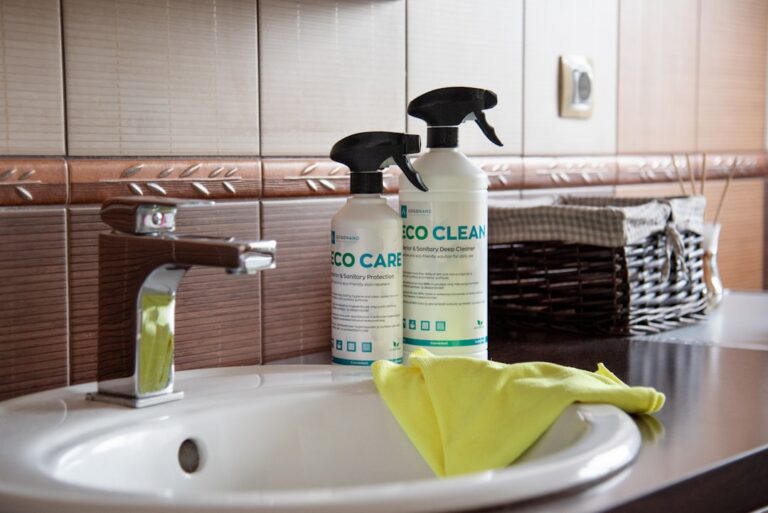
This is also when I deal with the sink itself, not just what is in it. A sink that gets wiped with soapy water daily but scrubbed properly once a week stays odor free. Baking soda worked into a damp sponge, left to sit for a few minutes, then rinsed, cuts through the film that builds along the drain edge. Skip this and the sink looks clean while smelling like it is not.
The stove is its own project, not a wipe-down
A quick wipe after cooking is maintenance. A real stove clean is different work and needs its own time, ideally once a week rather than folded into a five-minute counter wipe. Remove the grates or burner caps if your stove has them and soak them separately in hot water with a few drops of dish soap while you handle everything else. Grease that has baked on does not respond to a quick pass with a rag. It responds to time soaking and then a scrub with something slightly abrasive, like a paste of baking soda and water, worked in with a soft brush rather than steel wool, which can scratch enamel and coated surfaces.
The stove is the one place in the kitchen where patience matters more than pressure. Scrubbing harder on dried grease just moves it around. Letting it soften first is what actually removes it.
Counters last among the wet stage, floor comes after everything
Counters get wiped last in the wet sequence because they are the surface everything else drips onto while you work. Clean them too early and you are redoing them by the time you reach the sink.
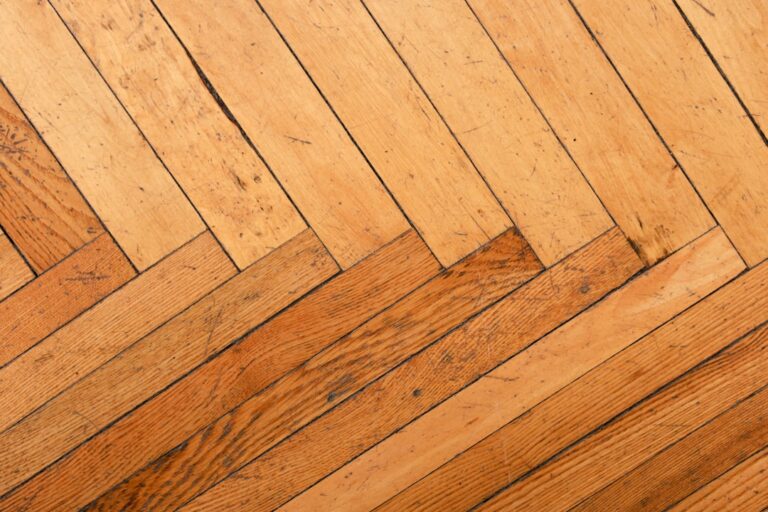
The floor is always last, full stop. Sweep first to get up crumbs and loose debris, because mopping over crumbs just turns them into a paste that smears rather than lifts. Then mop with a cleaner suited to the floor material, which is worth knowing specifically rather than guessing, since the wrong cleaner on stone or sealed wood can dull the finish over time.
Why this order actually saves time
The instinct to clean whatever looks dirtiest first feels efficient in the moment, but it is the reason kitchen cleaning stretches out and never feels done. Working high to low and wet to dry means each step protects the work you already did instead of undoing it. A kitchen cleaned in this order takes less total time than one cleaned by impulse, even though it can feel slower to start with the parts nobody notices, like the cabinet tops.
I keep a short mental list taped inside a cabinet door, more as a reminder for myself than anything decorative: cabinet tops and hood, stovetop and sink, counters, floor. Four steps, always in that order. It has cut my actual kitchen cleaning time by a real amount, not because I am moving faster, but because I have stopped moving backward.
A note on frequency
Not every step needs to happen every day. Counters and the stovetop wipe-down are daily. The sink scrub and cabinet tops are weekly. The full grate soak and a real floor mop, as opposed to a quick sweep, can happen once or twice a week depending on how much cooking the kitchen sees. Trying to do the full sequence daily is what makes people give up on having a sequence at all. Match the depth of the clean to how often the mess actually returns.