This article may contain affiliate links. If you buy through them, Living Beautifully Daily may earn a small commission at no extra cost to you. Learn more.
I own five pans in regular use, made of three different metals, and each one earns its place for a specific reason. That is not a collector’s habit, it is a practical one. Cast iron and stainless steel are the two materials people ask me about most, usually because they have been told one is better than the other, when the truth is they are built for different jobs and neither replaces the other completely.
What cast iron actually does well
Cast iron is dense and holds heat with real stubbornness, meaning once it is hot it stays hot even when you add cold food to it. That property is exactly why it is the right tool for searing a steak or getting a hard crust on cornbread. A thinner metal loses heat the instant food touches it, and the temperature drop undercuts the sear. Cast iron does not have that problem because there is so much thermal mass in the pan itself.
What cast iron is not good at is quick temperature changes. It heats slowly and unevenly if you rush it, with hot spots directly over the burner, and it cools slowly too, which makes it a poor choice for a sauce you need to pull off the heat immediately to keep from breaking. It is also genuinely heavy, which matters more than people expect when it comes to whether a pan actually gets used daily or ends up sitting in a cabinet because lifting it feels like a chore.
What stainless steel actually does well
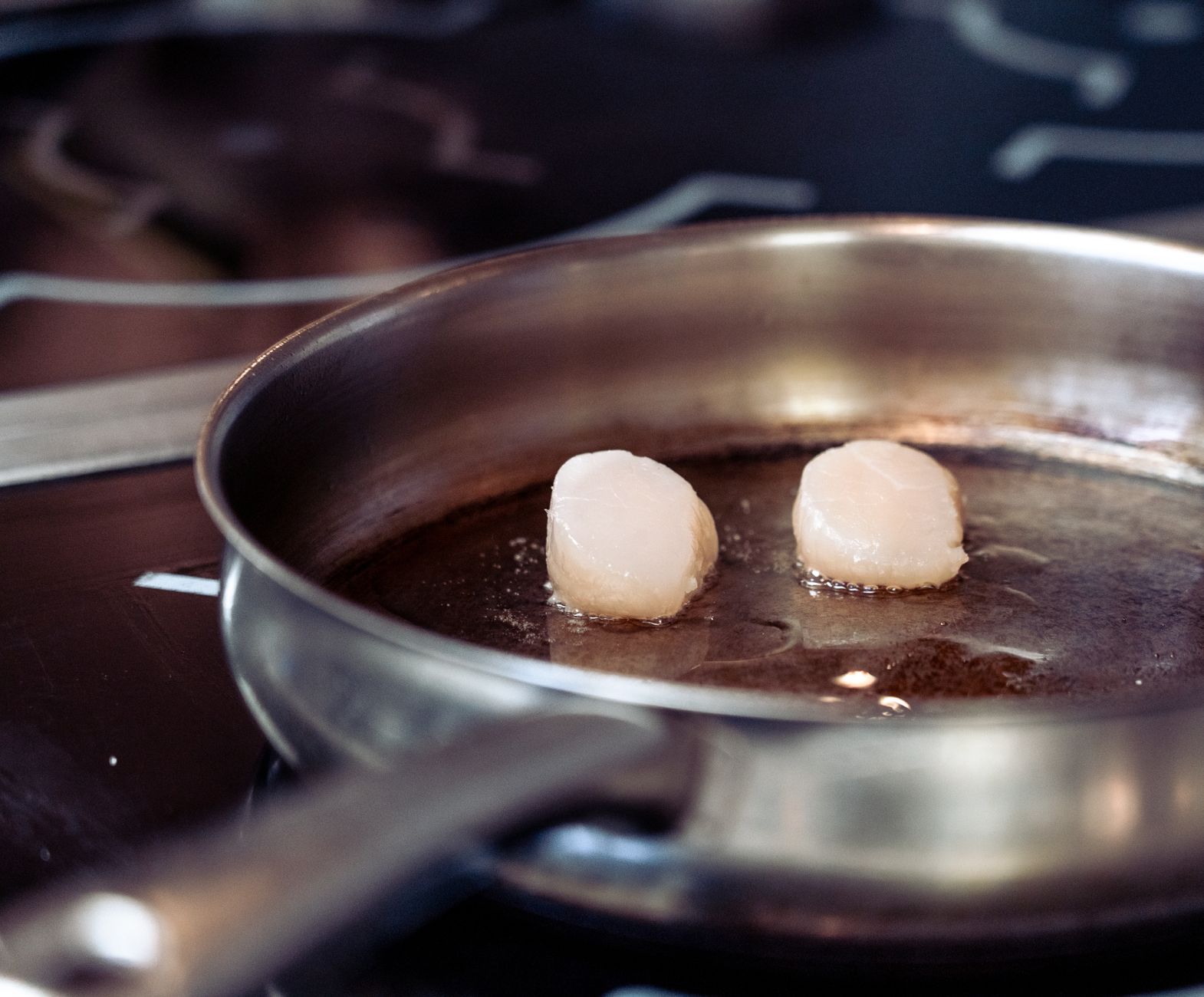
Stainless steel heats and cools quickly, which makes it the right choice for anything where you need responsive control, a pan sauce, eggs, vegetables you are trying to keep crisp tender rather than soft. It is also nonreactive, meaning it will not affect the taste or color of acidic foods like tomato sauce or wine reductions the way some other metals can. Cast iron, in contrast, can impart a faint metallic taste to a long simmered acidic sauce, which is part of why a cast iron pan is not the natural choice for that job even though it can technically hold liquid.
The quality marker to look for in stainless steel is whether it has a core of aluminum or copper sandwiched between layers of steel, often described as tri ply or multi ply construction. Steel alone conducts heat unevenly and creates the hot spots people complain about when they say stainless steel food sticks. The core metal is what actually spreads the heat across the base evenly. A single layer stainless pan, sold cheaply, will almost always disappoint for exactly this reason, and it is not a flaw you can cook your way around.
The weight and cost tradeoffs
Cast iron is inexpensive for what it is, since the manufacturing process is comparatively simple, and a basic cast iron skillet from a reputable maker will last generations if it is not abused. Good multi ply stainless steel costs more because bonding layers of different metals together evenly is a more involved process, and cheap stainless steel with only a partial core in the base is trying to look like the good stuff without the real cost behind it.
Weight is worth thinking about honestly before buying. A twelve inch cast iron skillet can be difficult to maneuver one handed, especially full of food, and that is a legitimate reason to choose a lighter stainless option for certain tasks even if cast iron would technically perform better. The best pan is the one you will actually pick up and use.
What to check before buying either
- For cast iron, check for an even, smooth cooking surface, older and higher end pieces are often smoother than modern budget cast iron, which can have a slightly pebbled texture from the casting process
- For stainless steel, look at the base from the side if possible, a visible sandwich of layers or a noticeably thick base is a sign of real multi ply construction
- Lift the pan in the store if you can, weight tells you more about how often you will actually reach for it than any spec sheet
- Check the handle attachment, riveted handles on stainless steel tend to be more secure long term than welded ones on lower cost pieces
- Avoid nonstick coatings as a substitute for choosing the right base metal, a coating wears off, the base metal is what you are actually buying for the long run
Building a set that actually covers your cooking
Neither metal needs to dominate your kitchen. A single cast iron skillet handles searing, cornbread, and anything that benefits from steady retained heat. A couple of well made stainless pieces handle sauces, eggs, and quick vegetable cooking where responsiveness matters more than mass. Buying one expensive set of a single material because it photographed well is how people end up with pans that sit unused while they reach for a cheap backup that actually does the job they need.
Choose the metal for the cooking task first. The pan that fits your hand and your actual meals will get used for decades. The one bought for the rack rarely does.