This article may contain affiliate links. If you buy through them, Living Beautifully Daily may earn a small commission at no extra cost to you. Learn more.
A simple vinegar and water solution gets recommended for almost everything, and I understand why. It is cheap, it smells like it is working, and it does handle a real range of household cleaning. But treating it as a universal cleaner is exactly the kind of shortcut that causes damage down the line, because vinegar is acidic, and acid does not know the difference between grime and a surface it should never touch.
The formula itself
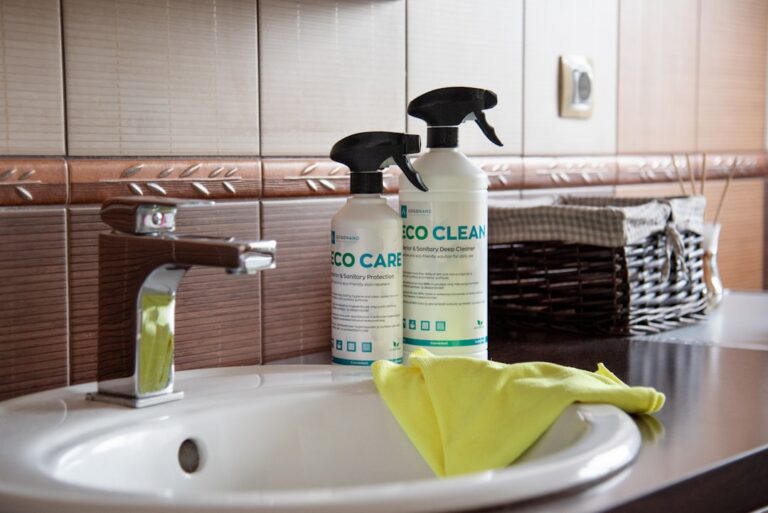
For general use, one part white distilled vinegar to one part water in a spray bottle covers most everyday cleaning: countertops that are not natural stone, glass, most sealed surfaces, and cutting through soap scum in a shower. For tougher grease, a stronger ratio, closer to two parts vinegar to one part water, cuts faster, but it also means a stronger smell and a slightly higher chance of irritating a surface that is sensitive to acid.
A few drops of dish soap added to the mix helps it cling to vertical surfaces and cut grease more effectively, since vinegar alone is a decent degreaser but not a strong one. This is the formula I actually keep mixed in a bottle under the sink, used for counters, appliance exteriors, and glass.
Where it must never go
Natural stone. This is the one that causes the most damage and gets ignored the most often, because granite, marble, and limestone counters and floors look tough. They are not, chemically speaking. These are surfaces built from calcium carbonate, and acid etches calcium carbonate. Vinegar on marble or limestone will leave a dull, cloudy mark that does not wipe away, because the surface itself has been chemically altered, not just stained. Granite is more resistant but still vulnerable over repeated exposure, and the etching often does not show up as damage until weeks of small dulling have accumulated, at which point it looks like the counter has lost its shine rather than looks like a cleaning mistake.
If a kitchen or bathroom has natural stone, the safe cleaner is a pH-neutral stone cleaner, or in a pinch, warm water with a small amount of plain dish soap, nothing acidic and nothing abrasive.
Hardwood floors
Vinegar is often recommended for hardwood because it evaporates quickly and does not leave residue, but repeated use on a sealed wood floor slowly breaks down the finish, leaving it looking duller over time rather than cleaner. A wood floor with a polyurethane seal should be cleaned with a cleaner made for that finish, or with plain water and a well-wrung microfiber mop, since the goal on wood is always minimal moisture, not extra cutting power.
Cast iron and unsealed metal
Vinegar strips seasoning from cast iron and can encourage rust on unsealed or unfinished metal surfaces. If a kitchen tool needs cleaning and it is cast iron, it needs a completely different process, not the all-purpose spray bottle.
Egg
This one surprises people. If egg has spilled on a counter, vinegar’s acid actually cooks the protein in the egg slightly, making it harder to remove rather than easier. Wipe egg up with plain water first, then follow with your regular cleaner once the surface is clear.
The instinct to reach for one cleaner and use it everywhere is understandable, but a kitchen has at least three different surface chemistries in it at any given time, and they do not all respond the same way to the same solution.
What actually belongs in a slow cleaning kit
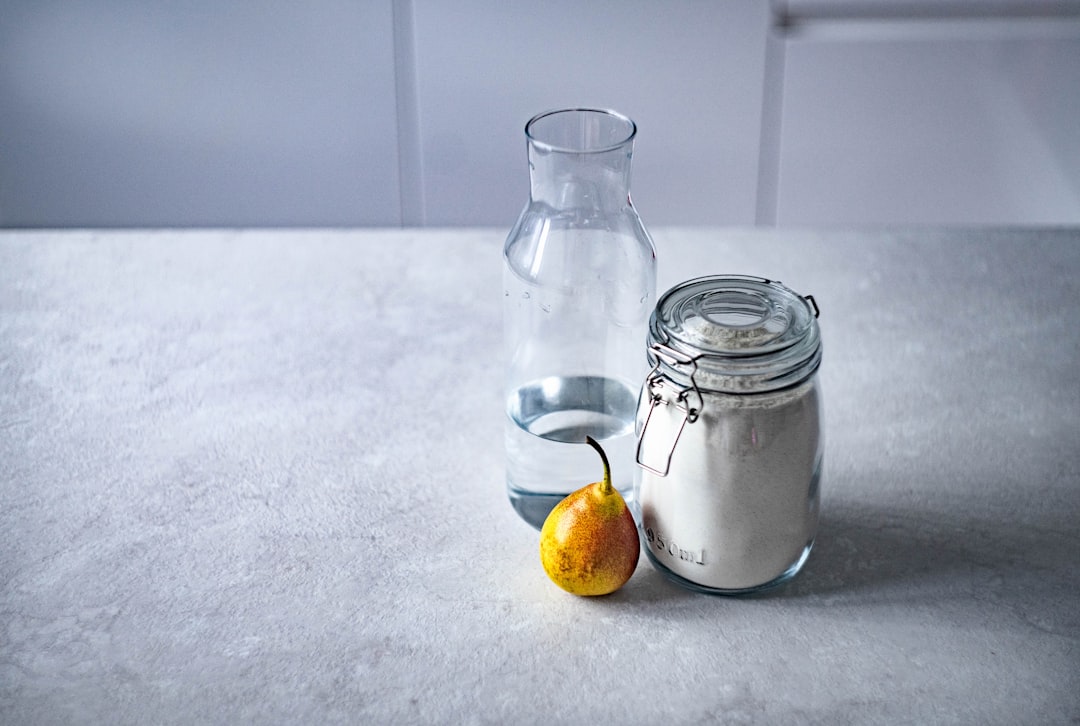
I keep three things on hand rather than one all-purpose spray: the vinegar and water mix for glass, sealed non-stone counters, and general degreasing; plain dish soap and warm water for anything natural stone, cast iron, or otherwise sensitive; and baking soda for scrubbing, since it is abrasive enough to lift grime without scratching most finishes, particularly useful on sinks, stovetops, and grout.
None of these are complicated to make or expensive to keep stocked. The only real skill involved is knowing which one belongs where, which mostly just means pausing before spraying and asking what the surface actually is, rather than reaching for whatever is already in your hand.
Testing before committing
When in doubt about a surface, a small test in an inconspicuous spot, a corner of a counter or the back edge of a floor tile, tells you more in thirty seconds than guessing does. Apply a small amount, wait a minute, wipe it off, and look closely at the surface in good light. If there is any dulling or change in texture, that surface is telling you plainly to use something gentler.