This article may contain affiliate links. If you buy through them, Living Beautifully Daily may earn a small commission at no extra cost to you. Learn more.
I have watched people buy pruners the way they buy sunglasses: whichever pair looked right on the shelf. Then they spend a season wondering why their hand cramps after twenty minutes of deadheading, and they blame their hand instead of the tool.
Pruners are not one-size tools, even though they are usually sold that way. The two variables that matter most are hand span and grip strength, and almost nobody checks either before buying. Hand span determines whether you can open the handles fully without straining your fingers apart. Grip strength determines how much resistance you can push through before your hand fatigues. A pruner sized for a large hand will feel loose and imprecise in a small one. A pruner sized for a small hand will force a large hand into an awkward, cramped grip that tires out fast.
Bypass versus anvil, and why it is not just preference
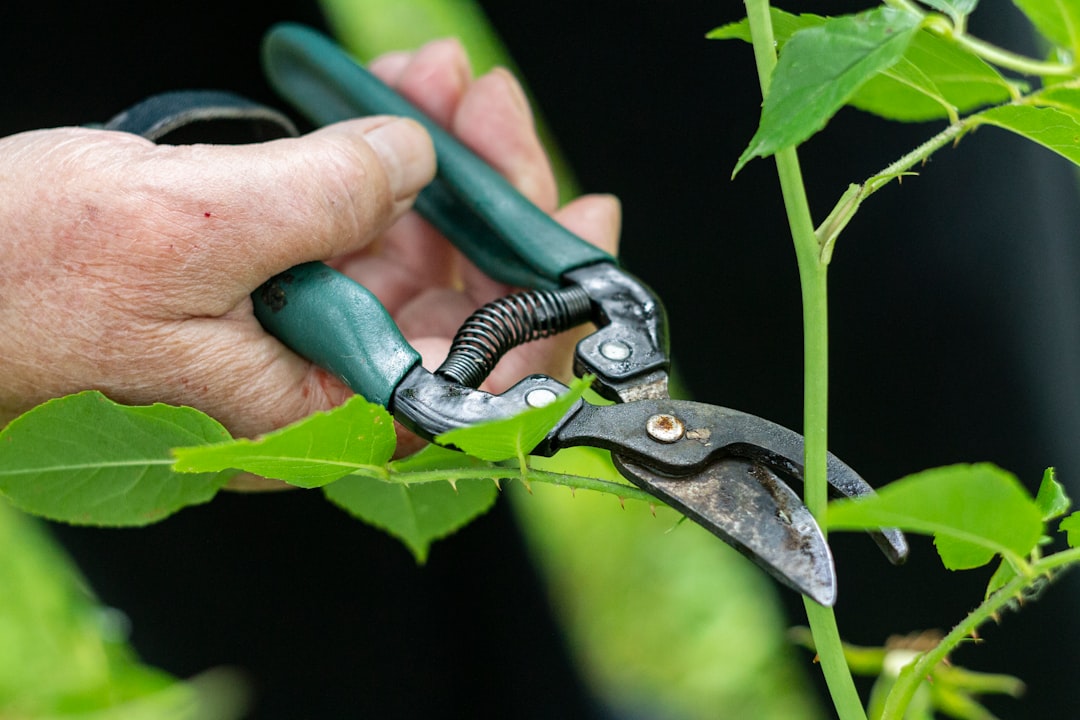
Bypass pruners work like scissors, with one curved blade sliding past a lower blade. Anvil pruners work like a knife against a cutting board, with a single blade closing onto a flat surface. The common advice is that bypass pruners are for live growth and anvil pruners are for dead wood, and that is true as far as it goes, but the more useful distinction is about the stem itself. Bypass pruners make a clean, angled cut that seals faster and looks less torn, which matters on anything you want to keep alive and growing. Anvil pruners crush slightly at the cut point, which does not matter on wood you are removing entirely but does matter on a rose cane you want to heal cleanly.
Most home gardeners only need one bypass pruner and possibly a set of loppers for anything thicker than the pruner can close through in one motion. Forcing a pruner through a stem too thick for it strains the pivot and leaves a ragged cut, which is worse for the plant than switching tools.
The grip that actually reduces hand strain
Handle shape matters more than handle material. A straight handle concentrates pressure into the center of your palm, which is where fatigue shows up first. A slightly curved or contoured handle spreads that pressure across more of your palm and fingers, which is the difference between pruning for ten minutes and pruning for an hour without your hand seizing up.
Spring-loaded pruners, the kind that pop back open after every cut, are easier on the hand than pruners you have to manually reopen, but only if the spring tension is right for your grip strength. A spring that is too stiff fights you on every cut. One that is too loose flops open unpredictably and makes precise cuts harder. Testing this in a store, if you can, matters more than reading a spec sheet, because spring tension is one of the few things that genuinely varies by feel rather than by number.
A tool that fits your hand disappears while you use it. One that does not fit announces itself in your palm by the second row of plants.
Sharpness is a maintenance habit, not a purchase
Even a well-fitted pruner will feel wrong if the blade is dull, because a dull blade forces you to squeeze harder to force the cut through instead of letting a sharp edge slice cleanly. That extra squeeze is where hand strain compounds. A quick pass with a small sharpening stone or a diamond file on the beveled edge, done every few weeks during active pruning season, keeps the blade doing the work instead of your hand.
Sap buildup does the same kind of quiet damage. A blade coated in dried sap grips the stem instead of gliding through it, which again means more force from your hand to finish the cut. Wiping the blades down with a cloth dampened in a little isopropyl alcohol after each use keeps them gliding rather than dragging.
What to actually check before buying
Open the handles all the way with the pruner in your hand. If your fingers are stretched to their limit at full extension, the tool is too large for you. Close the handles most of the way, simulating a cut. If your knuckles are cramped or overlapping, the tool is too small. Neither of these takes more than a few seconds in a store, but almost nobody does it, because the instinct is to judge a tool by its blade rather than its handle.
The right pruner for someone else is not automatically the right pruner for you, no matter how well it worked for them. Hand size and grip strength are personal measurements, and a tool that ignores them will always ask your hand to do work it should not have to do.