This article may contain affiliate links. If you buy through them, Living Beautifully Daily may earn a small commission at no extra cost to you. Learn more.
Most people pick up a paintbrush the way they pick up a pen, gripped low near the ferrule with the fingers doing all the steering. It feels natural because it mimics handwriting, and it is one of the main reasons cut lines along trim and ceilings come out shaky instead of straight. A brush is not a pen. It needs a longer stroke from the whole arm, and a pen grip does not allow that.
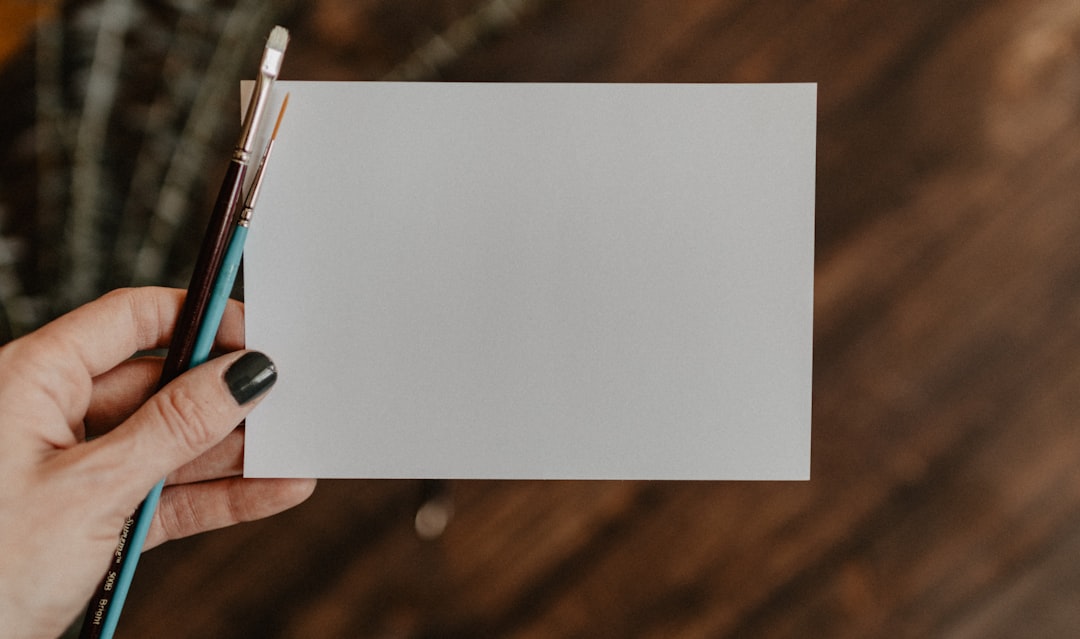
The handle of a quality trim brush is shaped and weighted the way it is on purpose, usually longer than a small craft brush, with enough heft to balance in the hand rather than pinch between two fingers. Holding it further back on the handle, closer to where a pencil grip would feel too far from the bristles, gives you more leverage and turns the stroke into a motion from the wrist and forearm instead of just the fingertips. That longer lever is what produces a straight, confident line instead of a series of small corrected wobbles.
The three grips, and when each one is right
A pencil grip, held low and controlled almost entirely by the fingers, is right for detail work: cutting in around a light switch, painting a narrow bead along a window pane, anything under a few inches where precision matters more than speed. It is not right for a long, straight run of trim, because the small muscles in your fingers fatigue and drift over distance in a way your forearm does not.
A fist grip, with the handle wrapped in the palm like holding a hammer, works for broad strokes on large flat surfaces like a door panel or a wide baseboard, where the goal is even coverage rather than a precise line. It gives you power and speed but very little fine control, which is exactly the tradeoff you want on a big surface and exactly the wrong tradeoff on a narrow trim edge.
The grip that actually produces a clean cut line, the one most people skip, holds the brush further back on the handle with the thumb and first two fingers, wrist relatively loose, guiding the stroke from the elbow rather than the wrist. This is the grip professional painters use for cutting in along trim, and it takes deliberate practice to feel natural, because it resists the instinct to grip tighter when precision matters.
Why a tighter grip makes the line worse, not better
The instinct when a line needs to be precise is to grip harder and move slower, and both of those instincts work against you with a paintbrush. A tight grip locks the small muscles in your hand and makes the stroke jerky rather than fluid, because tension does not produce control, it produces resistance. A relaxed grip, moving at a steady, unhurried pace, lets the bristles flex naturally against the surface and follow a straighter path than a white-knuckled, slow crawl ever will.
A shaky line is almost never about a shaky hand. It is about a grip that has taken away the hand’s ability to move smoothly.
Loading the brush changes how the grip has to compensate
A brush overloaded with paint is heavier on one side and pulls the stroke off course no matter how good the grip is, which is why people tighten their grip on an overloaded brush without realizing that is the actual problem. Dipping the brush about a third of the bristle length into the paint and tapping, not wiping, the excess against the inside of the can keeps the load even and light enough that the grip can stay relaxed. A brush loaded correctly barely needs the fingers to fight for control, because the weight is balanced along the stroke rather than concentrated at the tip.
The angle of the bristles matters as much as the grip
Holding the brush so the bristles meet the surface at a low angle, closer to 45 degrees than straight on, uses more of the bristle length in contact with the wall, which spreads the paint more evenly and makes the cut line easier to control because you can see the wet edge forming ahead of the brush rather than directly under it. A brush held nearly perpendicular to the surface concentrates pressure on the very tips of the bristles, which splays them unpredictably and is a common, underrated cause of an uneven line that has nothing to do with grip at all.
Building the feel before the real wall
Practicing the stroke on a scrap piece of cardboard or an old door before starting on visible trim lets your hand find the right pressure and angle without the stakes of a mistake on a finished wall. A few minutes of practice cuts more shaky lines than any brush upgrade will, because the brush was rarely the problem. The hand holding it, and the habits that hand brought from a lifetime of holding pens, usually was.